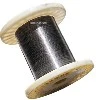
The production of ultrafine titanium wire (diameter 0.01-0.5mm) is one of the most technically challenging and rigorously controlled processes in the field of titanium metal deep processing. Its manufacturing is not simply about "size reduction", but a systematic engineering process that runs through raw material selection, multiple processing steps, precise heat treatment, and comprehensive testing. Any small deviation in each link may lead to the scrapping of the finished product, posing a great challenge to the comprehensive technical strength of the enterprise.
1, Melting process: source control of high-purity substrate
The core starting point of manufacturing is the melting of high-purity titanium ingots, which directly determines the basic properties and processing stability of the wire material. Vacuum consumable arc melting (VAR) or vacuum induction melting (VIM) processes are commonly used in the industry, with the core goal of strictly controlling the content of interstitial elements such as oxygen, nitrogen, and hydrogen. For medical and aviation grade ultrafine titanium wire, the oxygen content needs to be controlled below 0.12% and the hydrogen content should not exceed 0.0015%. But even if these impurities are beyond the standard, it will be rapidly expanded in further micrometer level drawing, leading to wire brittleness or performance degradation.
During melting, the composition system needs to be tailored for different application scenarios: industrial pure titanium (Gr1/Gr2) ultrafine wires concentrate on low impurities and high flexibility and the melting frequency needs to be optimized (generally 2-3 VAR remelting) to guarantee the uniformity of the composition; the ratio of aluminum and vanadium elements needs to be very precisely controlled for medical alloy wires such as Ti-6Al-4V ELI, and the oxidation must be suppressed in a vacuum environment, providing the basis for later biocompatibility and fatigue resistance.
2, Hot processing and cold drawing: fine control of grain size and stress
The melted titanium ingot needs to be processed into a titanium rod or billet with a diameter of 8-12mm through hot forging and hot rolling processes. At this stage, the forging temperature needs to be controlled within the critical range of the β phase zone (950-1050 ℃) and the α+β phase zone to avoid excessive grain size or uneven microstructure. After cooling, the wire blank enters the multi pass cold drawing process, which is the core step to achieve micrometer size. However, each drawing process will refine the titanium grain and accumulate internal stress. If not eliminated in time, it is highly likely to cause the wire to fracture during subsequent drawing.
Intermediate annealing treatment becomes a key buffer in the cold drawing process: it needs to be annealed under vacuum or inert gas protection atmosphere according to the change in wire diameter (3-5 passes per drawing), with temperature controlled at 550-650 ℃ and insulation time precise to the minute level. Undue annealing may result in lack of plasticity as well brittleness and higher probability of brittle fracture; Overannealing may lead to grain growth and influence the final strength of wire material. For ultra-fine wires of d ≤ 0.1mm, the drawing speed needs to be decreased to 0.5-1m/min and a special tungsten steel mold shall be employed to relieve friction and stress concentration.
3, Core difficulty: Micron level control of size consistency and surface quality
When the wire diameter approaches the micrometer level, the difficulty of controlling size accuracy and surface quality increases exponentially, which is also the core barrier to distinguish high-end and ordinary products. High end applications such as medical sutures and aviation sensors require a wire diameter tolerance control of ± 1-3 μ m. This not only requires a mold accuracy of 0.001mm, but also real-time monitoring of temperature, tension, and lubrication status during the drawing process. The lubrication system needs to use specialized synthetic lubricants to ensure lubrication effectiveness and avoid residual impurities contaminating the surface; The drawing environment needs to maintain a constant temperature (20 ± 2 ℃), constant humidity (50 ± 5% RH), and dust-free (Class 1000 clean area) to prevent environmental fluctuations from affecting dimensional stability.
Surface quality control is equally strict: the surface of the finished wire must be free of defects such as scratches, oxide layers (thickness ≤ 5nm), microcracks, etc. These defects will rapidly expand under stress or corrosive environments, leading to wire failure. For this purpose, electrolytic polishing or plasma cleaning processes are required to remove the surface oxide layer, while real-time screening of surface defects is carried out through an online optical detection system (detection accuracy of 0.0005mm), and unqualified products are immediately removed.
4, Finished product testing: Full dimensional verification of service reliability
The finished product testing of ultrafine titanium wire needs to cover size, surface, mechanical properties, and microstructure, forming a full process quality control loop. Online detection uses a laser caliper to monitor diameter fluctuations in real time. Offline detection includes surface defect microscopy (magnified 500 times) observation, tensile performance testing (fracture strength ≥ 800MPa, elongation ≥ 15%), metallographic analysis (verifying grain size and tissue uniformity), and medical grade product specific biocompatibility testing (cytotoxicity, sensitization testing). Some high-end products also require fatigue performance testing to ensure long-term stability under high-frequency cyclic loads.
Conclusion: Comprehensive manifestation of technological strength
The manufacturing level of ultrafine titanium wire directly reflects the melting, processing, quality control, and refined management capabilities of a titanium material enterprise. From titanium ingots to micrometer level wire materials, every link needs to balance the three core demands of "precision, performance, and stability". This is also why high-quality ultrafine titanium wire has long been monopolized by enterprises with a complete industrial chain (melting hot processing precision drawing full testing). With the upgrading of demand in high-end fields such as medical and aerospace, the process requirements for ultrafine titanium wire will continue to increase, promoting breakthroughs in titanium material processing technology towards finer and more precise directions.
Request a Quote
Email:bjcxtitanium@gmail.com
Whatsapp:+8613571718779