Titanium has long been a core material in high-end fields such as aerospace and military due to its excellent characteristics of low density, high strength, corrosion resistance, and biocompatibility. Nowadays, with technological iteration and cost optimization, this "high-precision" metal is accelerating its penetration into the civilian market, from daily necessities such as cups, pots, and kitchenware to fields such as 3C electronics, medical equipment, and green manufacturing, forming a diversified application pattern and becoming an important material support for promoting consumption upgrading and industrial upgrading.
Core application areas: multi-point flowering, continuous expansion of scenarios
Consumer home field: from niche light luxury to mass demand
The explosive growth of titanium in the consumer home market is most remarkable, with the cup and pot category becoming a breakthrough. Leading brands such as Fuguang were the first to apply aerospace grade titanium materials to thermos cups and pots. Their pure titanium pots sold over a thousand units within 28 hours of their debut on JD.com on November 11th, setting a category record. This type of product has become an upgraded choice for stainless steel products due to its advantages of safety, antibacterial properties, portability, and no residual odor. Its price range has also expanded from thousands of yuan in the early years to hundreds of yuan, with a price range of 111-499 yuan accounting for 60%, achieving the "popularization of high-end materials".
Besides cups and pots, titanium kitchenware is rapidly penetrating the entire kitchen scene. From 2023 to 2025, the compound growth rate of the transaction amount of JD titanium kitchenware will reach 109%, and the compound growth rate of transaction users will be as high as 118%. Products such as stir fry pans and tableware have become new choices for young people's quality life. According to Tmall data, the annual transaction volume of titanium containing kitchenware has exceeded 600 million yuan, with a year-on-year growth rate of over 120%, confirming the market's recognition of titanium made household products.
3C electronics field: the core choice of lightweight and high-end
The lightweight characteristics of titanium have become a key lever for the high-end development of consumer electronics. For the first time, the Apple iPhone 15 Pro series adopts a 5-grade titanium metal frame, which greatly increases the awareness of titanium in the mobile phone field. Subsequently, brands such as Xiaomi followed suit and launched titanium accessories, promoting a breakthrough of reducing the weight of titanium alloy phone frames by 30%.
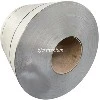
Under the category of wearable devices, the AppleWatchUltra sets the trend for titanium usage, growing by 40% annually. The 0.02 mm ultra-thin titanium sheet with a bending strength of 1.5GPa has been widely used as the key material for top-tier electronic products.
Medical and health field: relying on biophilicity to build core advantages
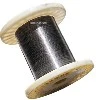
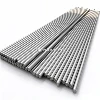
The biophilicity of titanium makes its application in the medical field irreplaceable, especially in the implantation of medical devices, which occupies a core position. 3D printing customized titanium alloy bone restorations can shorten the surgical cycle by 40%. Titanium rods have broken through biocompatibility and are widely used in products such as artificial joints and orthopedic implants. With the development of precision manufacturing technology, the cost of 3D printed titanium wire has been reduced to thousands of yuan/kg, promoting the development of personalized medical devices towards civilian use. Related products have entered the price range of thousands of yuan, benefiting more patients.
Titanium / Titanium Alloy Civilian Applications - Market Data Summary (English)
| Application Sector | Primary Use Cases | Estimated Market Share / Trends | Notes / Growth Drivers |
|---|---|---|---|
| Aerospace (Commercial Aircraft) | Airframe structures, engine parts, landing gear, fasteners | ~40% of titanium alloy use globally (2024-2025) | Titanium's high strength-to-weight ratio makes it critical for fuel-efficient, lightweight aircraft. |
| Medical & Healthcare | Orthopedic implants (hip, knee, spine), dental implants, surgical instruments | Growth fastest among end uses; medical implants CAGR ~7%+ through 2030 | Biocompatibility and corrosion resistance are key – adoption driven by aging populations and 3D printing technology. |
| Chemical & Industrial Processing | Corrosion-resistant heat exchangers, reactors, piping, desalination plants | Industrial applications growing with overall market; chemical processing demand expanded ~27% (recent data) | Titanium's corrosion resistance extends equipment life and reduces maintenance in harsh environments. |
| Automotive & Transportation | Lightweight structural components, high-performance valves, heat exchangers | Smaller share relative to aerospace/medical; automotive demand up ~21% in some data sets | Market penetration remains niche due to cost, but interest rising with EV and lightweighting initiatives. |
| Marine & Offshore Engineering | Ship components, subsea systems, seawater-resistant piping | Included in broader industrial demand growth | Excellent seawater corrosion resistance supports offshore oil–gas and marine infrastructure. |
| Electronics & Consumer Goods | Watches, electronics housing, specialty consumer parts | Smaller but notable niche segment | Premium products leverage titanium's durability and premium aesthetics. |
| Additive Manufacturing (3D Printing) | Powder and near-net shape components for multiple sectors | Titanium powder market growing rapidly (~14.8% CAGR in some forecasts) | Enables complex geometries and mass customization, especially for medical and aerospace parts. |
| Energy & Power Generation | Heat exchangers, steam condensers, renewable energy systems | Extended growth with industrial demand expansion | Titanium's performance in extreme operating environments drives adoption in energy production. |
In the field of medical assistance, titanium medical device accessories, rehabilitation equipment, etc. are gradually expanding. With their corrosion resistance and high strength, they improve the service life and safety of equipment, becoming an important material for upgrading medical equipment.
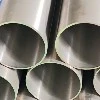
Green Manufacturing and High end Equipment Sector: Incremental Market Driven by Policies Driven by carbon neutrality policies, the demand for titanium materials in the field of green manufacturing continues to expand. In Building Integrated Photovoltaics (BIPV), the application of titanium panels improves power generation efficiency by 8% and reduces the total lifecycle cost by 15% compared to traditional curtain walls. It is expected that the application proportion in the Chinese market will increase from 5% to 15% by 2030. In the field of seawater desalination, titanium pipes replace copper nickel alloys for high-pressure pipelines, which are resistant to seawater erosion and corrosion. After large-scale application, the cost is reduced by 30%, making them the preferred material for seawater desalination projects.
The demand for high-end transportation equipment is also strong. The large specification TC4 titanium rod with a diameter of 400mm is applied to the CR450 high-speed railway bogie, achieving a weight reduction of 30% and improving the anti-corrosion life; In the cooling system of small modular nuclear reactors (SMRs), the single unit consumption of thin-walled titanium tubes exceeds 20 tons. With the acceleration of nuclear power approval, the related market size will exceed 5 billion yuan.
Market Development Status: Growth and Challenges Coexist
Rapid expansion of market size and continuous improvement of consumer awareness
China has become the core growth pole of the global titanium civilian products market. In 2023, the market size of China's titanium insulated cups will reach 1.6 billion yuan, accounting for about 28% of the global market share. It is expected to climb to 3.5 billion yuan by 2030, continuing to lead the world. E-commerce platforms have become an important driving force, with a year-on-year increase of 120% in the transaction volume of titanium drinking utensils on JD.com during the period of June 18th. In 2024, the transaction volume of JD titanium cups surged by 100% month on month, leading the growth rate of all water cup categories, marking the accelerated penetration of titanium civilian products from "niche high-end" to "mass quality life".
Behind market growth is a shift in consumer perception. Labels such as "Aerospace Same Metal" and "Bio friendly Metal" have made titanium materials popular among consumers, while practical advantages such as "99% antibacterial rate" and "safe and odorless" have made it an important choice for healthy consumption, surpassing the simple material premium.
Core constraints: Cost, process, and standards to be broken through
Despite the broad market prospects, the popularization of titanium in the civilian market still faces multiple obstacles. High cost is the primary issue, as the unit price of titanium material is 4-5 times that of stainless steel. In addition, SLM printing and other processing technologies have high costs, such as titanium alloy hinges, which cost 95 yuan per piece, more than 6 times that of traditional stainless steel hinges, resulting in some products still having high premiums.
The complexity of the process further limits production capacity and yield. Titanium alloy has complex deformation and high processing difficulty. The yield rate of CNC machining ultra-thin frames is less than 65%, far lower than the 85% of aluminum alloy, and the recovery rate of titanium chips is only 40%, resulting in resource waste and cost increase. Relying on forging technology in the production of large-sized bar materials results in long production cycles and high energy consumption; Small sized wires have problems such as narrow hot processing temperature range and unstable performance, making it difficult to meet the demands of high-end fields.
The lack of standards has also become a pain point in the industry. There is a lack of exclusive standards for the biological safety of 3C titanium alloys in China, and the detection of ion precipitation can only refer to the medical grade ISO10993 standard, which to some extent hinders the expansion of titanium materials in the emerging field of civilian products. In addition, the industry also faces problems of overcapacity and product homogenization, with some companies dumping at low prices resulting in profit compression, which in turn affects research and development investment and forms a vicious cycle.
Development trend and breakthrough path
In the future, the development of titanium in the civilian market will revolve around three core areas: cost reduction, efficiency improvement, and standard supplementation. In terms of cost control, the integration of the entire industry chain and technological iteration have become key. Fuguang has cooperated with JD Super Supply Chain through automated production lines to achieve controllable costs from the source to the end, successfully lowering the price of titanium cups and pots to the range of 100 yuan. This "reverse customization+scale procurement" model has become a reference paradigm in the industry.
Technological breakthroughs will focus on process optimization and performance improvement. The application of new processes such as hot isostatic pressing technology and electron beam cold bed melting can shorten the production process of titanium plates by 30%; Multi laser additive manufacturing technology can further reduce the cost of medical implants. Functional improvement technologies such as graphene coatings are currently being developed to address the shortcomings in thermal conductivity, and are expected to expand the application scenarios of titanium materials in the 3C electronics field.
The improvement of policies and standard systems will safeguard the market. The implementation of new standards such as GB/T45339-2025 will enhance the density requirements for products such as titanium forgings and standardize market competition; The EU carbon tariff policy has forced the titanium recycling rate to increase to 95%, promoting the development of green titanium technology and creating favorable conditions for China's titanium civilian exports.
The application of titanium in the civilian market, from "aerospace titanium" to "national cup pot", is a joint achievement of material technology progress, consumer demand upgrading, and industrial collaborative innovation. Despite still facing challenges such as cost and process, with continuous technological breakthroughs and market expansion, titanium materials will achieve large-scale applications in more civilian scenarios, becoming an important force in promoting quality living and industrial upgrading.
Request a Quote
Email:bjcxtitanium@gmail.com
Whatsapp:+8613571718779