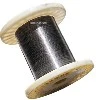
Titanium welding wire is a core welding material specifically used for welding titanium and titanium alloy structures based on titanium and titanium alloys. Its technical positioning far exceeds the "simple connection" function of ordinary structural steel welding wire. The core of the design lies in accurately replicating the mechanical properties, corrosion resistance, and structural stability of the base material during the welding process, ensuring that the weld and base material form an integrated stress structure, and avoiding the overall performance degradation of the component due to improper fitting of the welding material. This characteristic makes it an indispensable material for key welding processes in high-end fields such as aerospace, chemical equipment, and high-end medical. Its quality directly determines the service safety and service life of components under pressure, corrosion resistance, and high load conditions.
1, Classification of alloy systems: performance positioning adapted to different scenarios
Titanium welding wire The classification of the base system titanium welding wire is very consistent with the base material, the base material is mainly divided into two types: the industrial pure titanium welding wire and the titanium alloy welding wire. The two types of products form clear application boundaries based on their composition differences, accurately matching the performance requirements of different scenarios.
Industrial pure titanium welding wire is produced with Grade 1 and Grade 2 as the core grades, strictly following the ASTM B863 standard. The performance design focuses on welding plasticity, forming stability, and super strong corrosion resistance. The core of composition control is to strictly control the content of interstitial elements such as oxygen and nitrogen - Grade 2 oxygen content should be ≤ 0.18%, hydrogen content should be ≤ 0.0015%, which can effectively avoid embrittlement after high temperature welding and ensure the toughness of the weld. This type of welding wire has strong adaptability and is widely used in chemical corrosion-resistant pipelines, titanium heat exchangers, seawater desalination equipment, and low-temperature storage devices. It can serve for a long time in complex media such as acid, alkali, salt spray, and humidity, effectively preventing problems such as weld leakage and corrosion failure. It is the first choice for welding high-end titanium equipment for civilian use.
Titanium alloy welding wire is positioned with high strength and high fatigue performance as its core, achieving performance upgrades through precise control of alloy element ratios. Representative grades include Ti-6Al-4V, Ti-3Al-2.5V, etc., mainly serving fields with extremely high requirements for strength and reliability. Among them, Ti-6Al-4V welding wire has a tensile strength of over 1100MPa, balancing good welding toughness and structural stability, and is suitable for aircraft fuselage frames, engine compartment components
Aerospace scenes such as spacecraft force structures; Ti-3Al-2.5V welding wire optimizes low-temperature toughness and welding formability. After welding, the weld seam can still maintain excellent toughness in a -50 ℃ low-temperature environment. It is commonly used for welding aerospace low-temperature pipelines, high-end pressure vessels, and key structures of military equipment.
2, Core Features: Sensitivity to High Temperature Environments and Key Performance Control
The most significant technical characteristic of titanium welding wire in the welding process is its strong chemical sensitivity in high-temperature environments, which is also the core difference from other metal welding wires and the core pain point of welding quality control. At high welding temperatures of 800 ℃ and above, the chemical activity of titanium will sharply increase, and it is highly prone to react with oxygen, nitrogen, and hydrogen in the air, generating brittle compounds such as TiO2, TiN, TiH2, etc. These impurities will greatly damage the toughness of the weld, reduce the elongation of the weld by more than 30%, and easily cause hidden defects such as brittle fracture and microcracks in the weld. In severe cases, it can directly lead to sudden failure of the component during service.
Therefore, the quality control focus of titanium welding wire often goes beyond the welding process itself, and a full process control system needs to be formed: in terms of chemical composition, the hydrogen content of gap elements should be ≤ 0.0015%, and the nitrogen content should be ≤ 0.03%, in order to reduce the hidden danger of high temperature reactions from the source; In terms of surface quality, the finished welding wire needs to undergo electrolytic polishing treatment, with a surface roughness Ra ≤ 0.8 μ m to ensure no oxidation layer, oil stains, or scratches. It is also packaged independently in vacuum to prevent storage and transportation
Secondary pollution during transmission; During the welding process, argon gas with a purity of over 99.999% should be used for comprehensive protection, not only covering the weld area, but also protecting the heat affected zone until the component cools down to below 200 ℃, completely blocking the contact between ambient gas and high-temperature titanium materials.
3, Component matching: technical logic and performance compensation of "selecting silk according to material
The core principle of titanium welding wire application is to accurately match the composition with the base material, with the aim of avoiding uneven microstructure and sudden changes in performance in the weld area due to differences in composition, resulting in weak points under stress. Under normal working conditions, the welding wire and the base metal need to belong to the same alloy system, for example, Grade 2 base metal corresponds to
Grade 2 welding wire, Ti-6Al-4V base material matched with the same grade of welding wire, ensures that the mechanical properties and corrosion resistance of the weld and base material are completely consistent, achieving integrated force bearing. This matching logic may seem simple, but it can fundamentally avoid the problem of disjointed welding joint performance, which is the basic criterion for welding titanium components.
For key structural components such as aircraft engine blades and medical implants, simply matching components is far from enough. Welding thermal cycling inevitably leads to grain growth and alloy element burnout in the weld zone, resulting in local performance degradation. For this purpose, high-end titanium welding wire will adjust the alloy element content in a targeted manner, such as moderately increasing the aluminum and vanadium element content in Ti-6Al-4V welding wire, controlling the proportioning tolerance within ± 0.2%, in order to compensate for element loss during the welding process. At the same time, by optimizing the composition, the weld grain size will be refined, making the weld strength and fatigue life equal to or even slightly improved compared to the base metal. This is also the core technical logic that titanium welding wire cannot be replaced arbitrarily and must be selected according to the material, which is the key to ensuring the welding reliability of key components.
In summary, the technical value of titanium welding wire lies not only in the material itself, but also in the precise positioning of the alloy system, the full process control of high-temperature performance, and the scientific design of composition matching. From civil chemical engineering to high-end aerospace, only by achieving deep adaptation of "welding material base material process scene" can the excellent characteristics of titanium be fully utilized, meet the strict requirements of welding structures in different fields, and provide core support for the safe and stable service of titanium components.
Request a Quote
Email:bjcxtitanium@gmail.com
Whatsapp:+8613571718779