


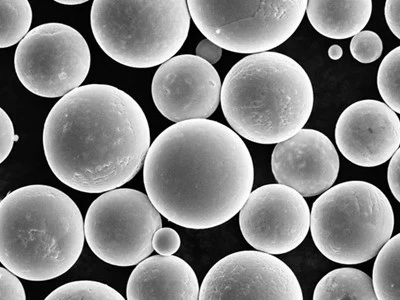
In the high-quality manufacturing industry, the performance of the material directly affects the security and service time of product, especially for the healthcare and aerospace industry with rigorous material requirements, where strength, corrosion resistance and biocompatibility are the must-have core indicators. Among all titanium alloys, TC4 ELI is one of the most desirable materials for the global high-end industry because of its outstanding overall properties.
Many people may not be familiar with TC4 ELI, which is actually the domestic common name for Ti-6Al-4V ELI, corresponding to the Grade 23 designation in the American standard internationally. It is, in effect, a "normal" TC4 titanium alloy with reduced interstitial contents. With the rigorous control of oxygen, nitrogen, carbon and other interstitial elements, it has a number of excellent properties compared with the conventional TC4 such as toughness, fracture property and biocompatibility, which is the secret of its high-end application.
In terms of performance, TC4 ELI has excellent performance, and its tensile strength is greater than 860MPa, the yield strength is not less than 795MPa, the elongation rate is not less than 10% meets the American specification of high grade titanium alloy standard of performance. Although the strengthere is slightly modified compared to the standard TC4, it has much better ductility and fracture toughness, which makes it extremely ideal for making crucial parts which have very tight safety margins.
The medical industry is the most critical application scenario for TC4 ELI. With its non-toxic, non-magnetic, and good biocompatibility characteristics which not cause rejection of human body and does not leach metal ions, it meets the American standard ASTM F136. It finds wide application in artificial joints, orthopedic implants, dental implants and the like. For instance, orthopedic hip joints and bone screws, as well as dental implants, can withstand long-term dynamic loads on the human body while reducing weight and enhancing comfort. With an elastic modulus close to that of human bone, it effectively minimizes the "stress shielding" phenomenon.
Beyond the medical field, the aerospace industry also relies on TC4 ELI. With its high strength, low density, and excellent fatigue resistance, it meets the relevant American aerospace-grade titanium alloy standards. It is commonly used in aircraft engine components, hydraulic system parts, and critical load-bearing structural elements, particularly excelling in scenarios demanding high fracture toughness, where it outperforms standard TC4.
In the fields of marine engineering and chemical processing, the corrosion resistance advantages of TC4 ELI are fully utilized. Chloride ions in seawater are highly corrosive, and ordinary metals are prone to corrosion, while TC4 ELI effectively resists seawater erosion, meeting relevant corrosion-resistant standards in the U.S. It is widely used in offshore platforms, seawater desalination equipment, high-end heat exchangers, and high-corrosion fluid transportation systems. Additionally, it is gradually gaining popularity in high-end sports equipment and precision electronic devices, meeting the dual requirements of weight and strength for premium products through its lightweight and stable mechanical properties.
|
Application Field |
Corresponding American Standard |
Core Application Scenarios |
|
Medical Industry |
ASTM F136 |
Artificial joints, orthopedic implants, dental implants, etc. |
|
Aerospace Industry |
Relevant American Standards for Aerospace-Grade Titanium Alloys |
Aircraft engine components, hydraulic system parts, key load-bearing structural parts, etc. |
|
Marine Engineering and Chemical Industry |
Relevant American Standards for Corrosion-Resistant Titanium Alloys |
Offshore platforms, seawater desalination equipment, high-end heat exchangers, etc. |
|
Base Grade |
Grade 23 |
Basic positioning of TC4 ELI (Ti-6Al-4V ELI) |
Email:bjcxtitanium@gmail.com
Whatsapp:+8613571718779


