In the chemical industry, the fate of equipment is almost determined by the materials it selects from the very beginning. The complex and harsh working conditions of strong acid, strong alkali, high chlorine, high pressure, and high temperature are like a high-strength screening net, making it difficult for many traditional metal materials to withstand. And titanium materials, especially those used in the form of rods for various key dynamic and static components, are increasingly becoming a "strategic choice" to ensure production continuity and safety, thanks to their stability of "responding to changes with stability".
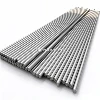
The particularity of the chemical industry is that corrosion often does not occur uniformly. At the connection parts of the pump valve shaft, agitator blade, and flange, the material not only needs to withstand chemical erosion of the medium, but also needs to cope with mechanical stress, erosion wear, and even thermal stress caused by temperature fluctuations. Titanium rods exhibit unique advantages at these key stress points due to their dense structure forged or rolled as a whole.

For highly corrosive environments, industrial pure titanium (ASTM Grade 2) rods are the cornerstone.
The value of Grade 2 titanium rods lies in establishing a new 'performance baseline'. In wet chlorine gas, chloride solutions, oxidizing acids (such as nitric acid), and many organic media, the titanium dioxide passivation film formed on its surface is extremely stable and can effectively resist pitting corrosion, crevice corrosion, and stress corrosion cracking - which are precisely the most common and dangerous forms of corrosion that cause stainless steel equipment failure. For example, Grade 2 titanium rods used as pump shafts and valve stems in the chlor alkali industry often have a service life that is more than 5 times that of similar stainless steel components. This ultra long service life not only reduces the material cost of spare parts replacement, but more importantly, avoids unplanned shutdowns caused by sudden corrosion failure of key components. The value of production continuity it brings far exceeds the material price difference.
When the structural strength becomes a bottleneck, Grade 5 (Ti-6Al-4V) titanium rods appear.
Chemical equipment is not entirely static containers. The stirring shaft of large reactors, the tube bundle support rod of high-pressure heat exchangers, and the drum shaft of high-speed centrifuges need to withstand significant torsional, bending, or tensile loads in corrosive environments. At this stage, Grade 2 pure titanium might seem too weak. The tensile strength of Grade 5 Ti alloy rod is over 2.5 times that of Grade 2, and thanks to its outstanding specific strength, the designers can reduce the dimensions of the components and obtain more compact structural configuration without compromising the safety factors. More importantly, not only does Grade 5 retain good corrosion resistance, it also possess superior fatigue and creep resistance which mean a lot as a vital safety bearing for moving parts that are exposed to cyclic loads and/or elevated temperature for an extended period of time.
Beyond anti-corrosion: an inherent requirement to ensure the purity of the process.
In the fields of fine chemicals, pharmaceuticals, and high-purity electronic chemicals, any impurities released from materials may contaminate the products and result in the entire batch being scrapped. Another implicit advantage of titanium material is highlighted here: it produces very few corrosion products, and the oxide film formed on the surface is dense and has strong adhesion, making it difficult to peel off and become particles in the product. The stirring shaft and connecting rod made of titanium rod can maintain a smooth surface even after long-term operation, greatly reducing the risk of product degradation caused by metal ion contamination or foreign object introduction. This guarantee of process purity cannot be measured by simple anti-corrosion costs.
Calculate the full lifecycle economic account.
The cost of titanium rods should not be limited to the unit price of purchase orders alone. It is a "full lifecycle economic account" that requires precise calculation: higher initial material costs result in extremely low maintenance frequency, almost zero risk of accidental leaks, and increased production efficiency and capacity utilization due to long-term equipment operation. In many large-scale chemical plants with continuous production, the loss from an unplanned shutdown may be enough to cover the investment in upgrading the entire key equipment to titanium materials. Therefore, positioning titanium rods as "strategic materials" is based on their core supporting role in the long-term, stable, and safe operation of production systems.
Choosing titanium rods is not only about choosing a material, but also about choosing an engineering value oriented towards long-term reliability. It requires designers to break free from the limitations of initial costs and examine the true return on investment from a systematic and long-term perspective, in order to maximize safety and efficiency throughout the entire lifecycle of chemical plants.
Request a Quote
Email:bjcxtitanium@gmail.com
Whatsapp:+8613571718779