


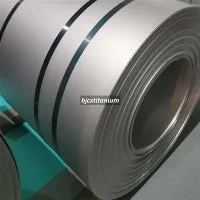


Titanium Wire For Implants
Standard:ISO5832-3, ASTM F136
Diameter:1-4mm
Tensile strength:>1080MPa
Shape:Straight wire
Characteristic:Surface roughness≤0.8µm
Application:Kirschner wire, elastic intramedullary nail
Certificates:Test report, Third party test report
Titanium Wire for Implants is widely used in precision medical fields such as medical devices, trauma fixation, dental implant structures, cardiovascular device skeletons, and nerve repair guide wires. The medical titanium wires we provide are made of ASTM F67 (Grade 1/Grade 2) high-purity commercial pure titanium and ASTM F136 (Grade 5 ELI) medical titanium alloy, which have high purity, stable composition, and controllable mechanical properties, meeting the strict requirements of the implant grade industry for safety, corrosion resistance, and tissue compatibility. The typical size range of medical titanium wire covers precision ultra-fine specifications of Ø 0.05-0.80 mm, which can achieve extremely narrow tolerances and mirror finish surface treatment according to different applications, making it safer and more stable for long-term use in the human body.
Products Description
Medical Pure Titanium vs. Medical Titanium Alloy – Properties Comparison Table
| Category | Medical Pure Titanium (ASTM F67 – Grade 1 / Grade 2) | Medical Titanium Alloy (ASTM F136 – Grade 5 ELI) |
|---|---|---|
| Material Type | Unalloyed Commercially Pure Titanium (CP Ti) | Ti-6Al-4V ELI (Extra Low Interstitial Alloy) |
| Typical Purity | ≥ 99.5% Titanium | Titanium with Aluminum (6%) & Vanadium (4%) |
| Microstructure | Single-phase α titanium | α + β dual-phase alloy |
| Tensile Strength | Grade 1: 240–350 MPa Grade 2: 345–485 MPa | 860–980 MPa |
| Yield Strength (0.2%) | Grade 1: 170–275 MPa Grade 2: 275–380 MPa | 795–860 MPa |
| Elongation | 20–30% (Excellent ductility) | 10–14% |
| Elastic Modulus | ~ 100–105 GPa | ~ 110 GPa |
| Density | 4.51 g/cm³ | 4.43–4.50 g/cm³ |
| Corrosion Resistance | Excellent (best among titanium grades) | Very good |
| Biocompatibility | Excellent (high tissue affinity) | Excellent (proven orthopedic grade) |
| Fatigue Strength | Moderate | Very High |
| Hardness | Lower (Softer, easier to form) | Higher (Stronger, more wear-resistant) |
| Weldability | Very High | Good |
| Machinability | Good | Moderate–Difficult |
| Magnetic Properties | Non-magnetic | Non-magnetic |
| Recommended Applications | Dental wires, springs, trauma fixation wires, soft-tissue contact implants, cardiovascular frames | Load-bearing orthopedic implants, bone screws, plates, dental implants, micro-stents, precision components |
| Typical Wire Diameter Range | Ø0.05–0.80 mm | Ø0.06–0.50 mm |
| Key Advantages | Highest purity, best ductility, excellent corrosion resistance, easy forming | Superior strength, fatigue resistance, ideal for load-bearing structures |
| Limitations | Lower strength, not ideal for high-load conditions | Harder to process, higher cost |


In trauma implants such as bone plate fixation structures and cable systems, ASTM F67 Grade 2 titanium wire is commonly used, with a size range of Ø 0.30-0.60 mm. Its characteristics are high ductility and good toughness, which can maintain structural integrity during bending and winding; In dental implant peripheral instruments, corrective accessories, and supporting spring structures, it is more suitable to use Ø 0.10-0.40 mm ultra-fine bright titanium wire, which has higher fatigue stability. In cardiovascular implant devices, such as micro support skeletons and guide wires, ASTM F136 (Grade 5 ELI) Ø 0.06-0.20 mm ultra-fine wires are often used to achieve higher strength, better creep resistance, and lower risk of fracture. The combination of different sizes and grades enables titanium wires to maintain excellent biocompatibility and mechanical stability in multiple scenarios.
ASTM F67 (Grade 1/2) is renowned for its high purity, strong biological inertness, and significant corrosion resistance; It has almost no precipitation reaction in body fluid environment and is one of the safest metal materials for long-term contact with bone tissue, soft tissue or body fluid environment. ASTM F136 (Grade 5 ELI), due to its aluminum and vanadium content, has higher tensile strength and yield strength while ensuring biocompatibility, making it highly suitable for load-bearing components, implant components that require higher stability, and precision support systems. The titanium wires we provide can achieve strict mechanical performance control, such as maintaining tensile strength, yield strength, and elongation above medical grade standards, and can further adjust the performance curve according to the customer's end use to meet the needs of different implant systems.
In addition to standard sizes, we can provide high-precision ultra-fine wires with a coverage tolerance of ± 0.002-0.01 mm, and can perform different levels of surface treatment, including ultra bright surfaces, de oxidation, stress relief annealing, ultra clean medical surface grades, etc. If used for implantable components, we can also provide various delivery forms such as single axis drawing, precision coiling, stable curling structure, fixed length cutting, mini scroll, etc., to reduce the difficulty of secondary processing for customers. The customizable content includes diameter size, tensile strength range, surface grade, coil specifications, elastic modulus adjustment, cleanliness level, packaging method, etc., providing highly flexible supply solutions for the research and mass production of different medical enterprises.
As an implant grade titanium wire manufacturer, we have established a strict quality control system throughout the entire process from smelting, drawing, annealing, surface treatment to final medical packaging. Each batch of materials comes with chemical composition testing, mechanical property reports, metallographic structure records, and additional verification from ASTM, ISO, and third-party medical laboratories can be provided according to customer requirements. Our production line focuses on high-precision ultra-fine wires with a diameter of ∅ 0.05-0.80 mm. The equipment has a long-term stable pressure control tension mode, ensuring that the surface of each meter of wire material is free of scratches, burrs, and acid residue. It is particularly suitable for the extremely high surface cleanliness required for deep implantation and minimally invasive instruments.
Why choosing us
The primary reason for choosing us is that we have one of the few deep adaptation capabilities in the customization industry. We can not only make special adjustments to the diameter, hardness, tensile strength, elongation, and curling method of titanium wire based on customer samples, structural drawings, or end use methods, but also highly match the material with the customer's implantation system through mold customization, annealing curve customization, surface finish customization, etc., reducing wire breakage rate, instability, and batch differences in subsequent processing. Many medical companies often require very small batches of trial production materials with specific mechanical characteristics in the early stages of development. However, we can provide continuous supporting services of "small batch medium batch mass production", which not only shortens the research and development cycle, but also enables new products to be put into the market faster.
The second reason for choosing us is that our comprehensive after-sales and technical response mechanism can significantly reduce customers' procurement and production risks. In response to the highly demanding stability requirements of the medical industry, we provide services such as full process tracking, batch traceability, comparability of mechanical data, and long-term data archive management, allowing customers to obtain complete material behavior references before formal production. At the same time, we provide real-time technical consultation, such as recommendations on corrosion resistance, deformation stability, fatigue life, etc. of different grades in different implantation environments, so that procurement no longer relies on repeated trial and error, but can quickly determine the most suitable material parameters at the lowest cost.
The third reason for choosing us comes from our long-term controllable ability in terms of delivery time and quality stability. Implanted grade titanium wires often have extremely high requirements for delivery time and consistency, and we have established independent production lines, dedicated ultra-fine wire equipment groups, and strict batch planning management to ensure that each batch of materials can maintain consistency in performance, smoothness, and winding tension under the same process, ensuring that the continuous production of medical customers is not affected. We also provide a quick response mechanism for after-sales service. When customers encounter problems such as unstable bending behavior, elastic deviation, and differences in processing performance during use, we can quickly track the cause and provide countermeasures, making cooperation more stable and efficient.
Request a Quote
Email:bjcxtitanium@gmail.com
Whatsapp:+8613571718779
Hot Tags: titanium wire for implants, China titanium wire for implants manufacturers, suppliers, factory
You Might Also Like



Send Inquiry